Japan, as I see it, before and after my trip
Stepan Grigoryan, Yerevan, Armenia, November 5, 2024
In October 2024, I visited Japan for the first time. I have been to more than 40 countries around the world, but I had never had the chance to visit this beautiful country.
How did it happen that I was able to visit Japan?!
The Ministry of Foreign Affairs of Japan (MOFA) prepared an extremely interesting program in Japan, which included meetings at the MOFA, the Ministry of Defense of Japan (MOD), and the Japan International Cooperation Agency, as well as meetings with leading experts and journalists of the country. The program also included an introduction to the culture and traditions of the Japanese people.
What did I know about Japan before my trip?!
That it is a technologically highly developed country, and also a member of the Group of Seven (G7).
Of course, I knew that Japan is a democratic country with a parliamentary system of government.
Of course, I had heard about sumo and karate, the “calling cards” of Japanese sport.
Of course, I also knew about the tragedy of universal proportions – the nuclear bombings of Hiroshima and Nagasaki and the terrible consequences for the lives and health of the country’s citizens. The organizers of my visit included a visit to Hiroshima in the program, for which I am very grateful to them. Having visited the Peace Memorial Park in Hiroshima, I wanted to show my deep respect and sympathy to the victims of this terrible tragedy.
I knew that the Japanese people are exceptionally hardworking and, at the same time, peace-loving people.
I also remember that Japan was called the Land of the Rising Sun.
However, what I saw during my eight-day visit to Japan left a huge impression and showed how important it is to visit Japan personally.
What “caught my eye” during the first days of my stay in Japan
First, it is the exceptionally friendly attitude of the Japanese towards guests and the desire to show the best sides of the traditions and culture of the Japanese people. To do everything so that guests like Japan.
Second, it is the respectful way the Japanese treat both guests and each other. The well-known “bending forward and folding the palms of the hands in front of the face” is a manifestation of a deep national tradition – greeting and respect for any person.
Cultural program
The cultural program included a visit to Kyoto and Miyajima Island.
Kyoto is the former capital of Japan, famous for its numerous Buddhist temples, gardens, imperial palaces, Shinto shrines and ancient wooden houses.
I would like to draw attention to the fact that in Armenian tradition, a garden occupies a fairly large area where well-groomed trees, bushes and flowers grow. During my trip to Japan, I saw that in the Japanese tradition, a garden is also called a fairly small area occupied by decorative trees and bushes. The area of such gardens can be no more than a few square meters.
I just remembered that in the courtyard of the Hotel New Otani in Tokyo, where I was accommodated, there was an absolutely beautiful Japanese garden. It was a pleasure to walk along it, where there were beautiful bridges and ponds in which fish of different colors and sizes swam.
In Kyoto I saw the Rock Garden, Ryoanji Temple, and also the Unique wash-basin of stone (“Tsukubai”).
What “caught my eye” everywhere I went was the exceptionally careful attitude of the Japanese to their historical heritage and traditions.
Miyajima is a sacred island in the Inland Sea. It is believed that it was on Miyajima that the goddess of the sun Amaterasu first set foot on land. Here you understand why Japan is called the Land of the Rising Sun.
On the island there is the Shinto shrine Itsukushima, which included in the UNESCO World Heritage List. According to chronicles, the shrine was founded in the 6th century. In addition to Itsukushima, there are many other temples and shrines on the island. On this small island, my Japanese friends and I spent the whole day – we visited the Itsukushima Shrine, walked along narrow streets with beautiful old houses, bought wonderful souvenirs and saw absolutely charming tame deer.
In the water near the shore there are huge scarlet torii, which mean that the whole island is sacred. Previously, in order to set foot on the island, you had to swim through the torii to purify yourself. These torii are considered one of the symbols of Japan.
In general, Japan has many symbols, such as blooming sakura, and the majestic volcano Fuji, and, of course, the red torii gates hovering over the water on Miyajima Island. I saw Mt. Fuji from the plane when we began to land at Tokyo Airport. The captain of the plane drew our attention to this. A divinely beautiful mountain, incredibly similar to Little Ararat!
My friends in Japan also drew my attention to the fact that the country has an exceptionally respectful attitude towards the Emperor of the country, and in general towards the institution of monarchy. The Emperor of Japan is a symbol of the state and the unity of the nation. In the conditions of a constitutional monarchy, Emperor performs mainly representative functions. According to legend, the emperors of Japan are direct descendants of the sun goddess Amaterasu. It is interesting that, unlike the British tradition, the image of the Emperor of Japan cannot be placed on Japanese banknotes. Indeed, is it possible to carry Gods in trouser pockets or see them on worn-out old banknotes?!
Tea ceremony in a kimono in Kyoto
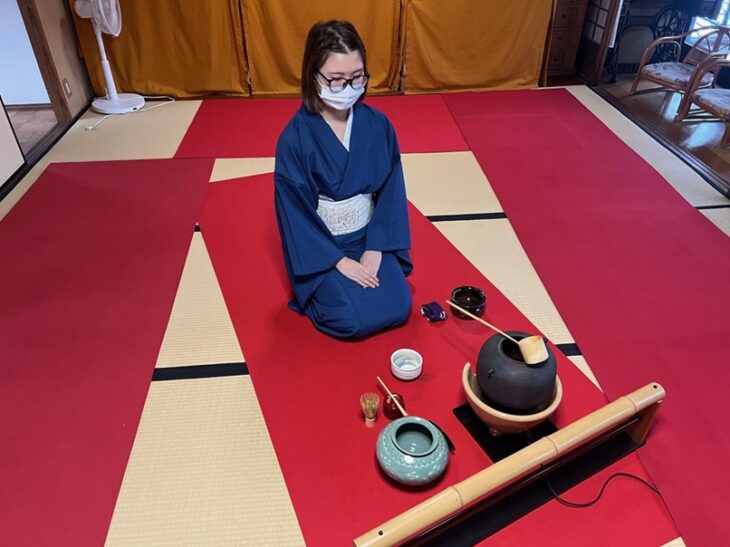
In Kyoto I was invited to participate in a tea ceremony. This is a kind of ritualized form of joint drinking of powdered green tea (matcha), created in the Middle Ages in Japan and is still cultivated in the country (see, Photo 1).
In a tea house, a traditional tea ceremony was held for me and my Japanese friends. The girl (the master) who conducted the ceremony was in a real kimono. The tea ceremony is held in a tea room. The master led us step by step through the canons of the traditional tea ceremony. This is a ritual activity where ceremonial tea is prepared and served, promoting physical and mental well-being, concentration and harmony.
This is also called “the way of tea”. Watching the ritual, how the master beautifully and harmoniously uses traditional utensils to prepare the perfect cup of tea the way it was done hundreds of years ago, was a pleasure. We were sitting on the floor in a fairly comfortable position.
The girl who performed this ceremony came out with us into the street and bowed and said goodbye to us.
Visit to Hiroshima
I am very grateful to the organizers of my trip for visiting Hiroshima, because I knew about the great tragedy – the nuclear bombings of Hiroshima and Nagasaki and the huge number of dead and injured people.
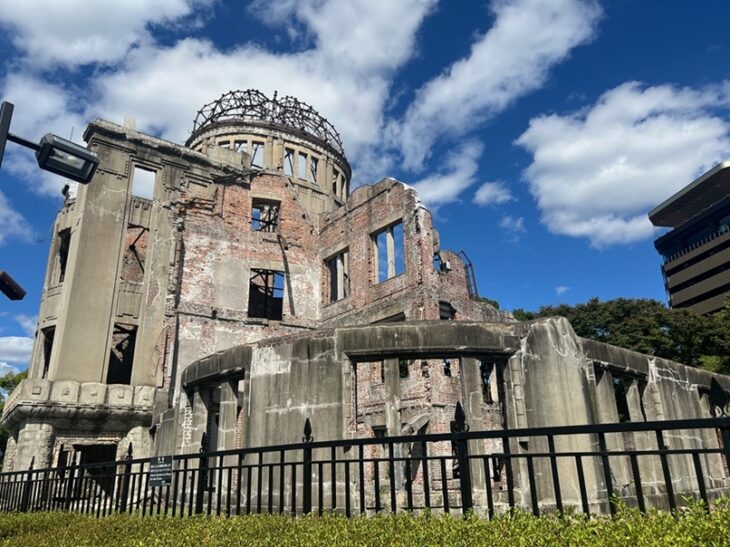
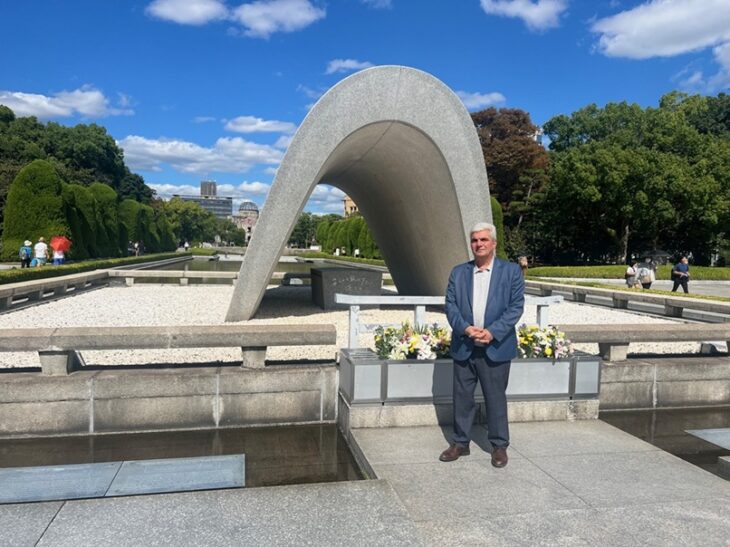
Having visited the Peace Memorial, the Peace Memorial Park and the Hiroshima Peace Memorial Museum in Hiroshima, I wanted to show my deep respect and sympathy to the victims of this terrible tragedy (see photos 2 and 3). To be in solidarity with the victims of nuclear bombings is the duty of all people living on Earth.
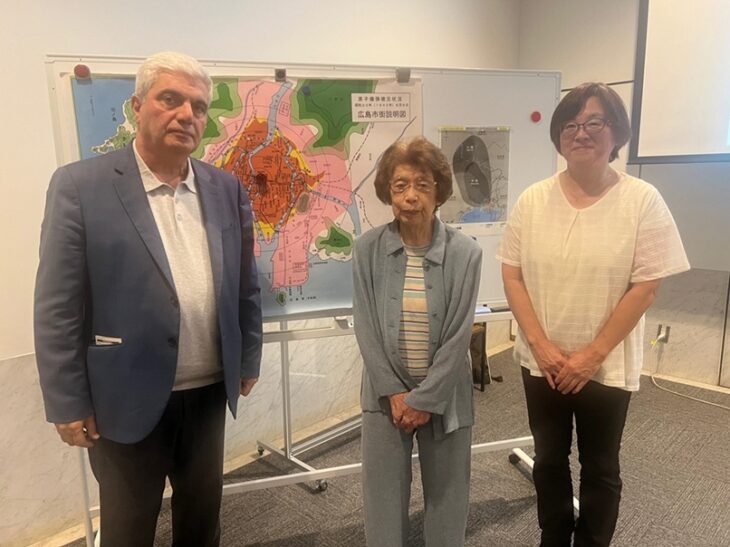
During my visit to the Hiroshima Peace Memorial Museum a meeting was organized for me with Ms. Sadae Kasaoka, who survived the nuclear bombings (see Photo 4). This brave woman devoted her entire life to the fight against the use of nuclear weapons, and continues to fight for their complete destruction.
It is noteworthy that immediately after my return to Yerevan on October 10, we all received good news. The 2024 Nobel Peace Prize was awarded to the Japanese Nihon Hidankyo movement. The non-governmental Nihon Hidankyo movement was founded in 1956 by Japanese survivors of the atomic bombings of Hiroshima and Nagasaki. The organization uses the stories of the victims of the atomic bombings of Hiroshima and Nagasaki to tell the world about the dangers of nuclear weapons.
The representative of the Nobel Committee, announcing the prize, noted that Nihon Hidankyo tirelessly advocates for a world without a nuclear arsenal. They inspire and inform people around the world and create the basis for the future existence of humanity in a safe environment.
I should also note that today Hiroshima is a rather beautiful modern city.
Visit to the Nissan automobile factory
Nissan was founded in 1933, and its headquarters are located in Yokohama. Currently, this Japanese automaker is one of the largest in the world.
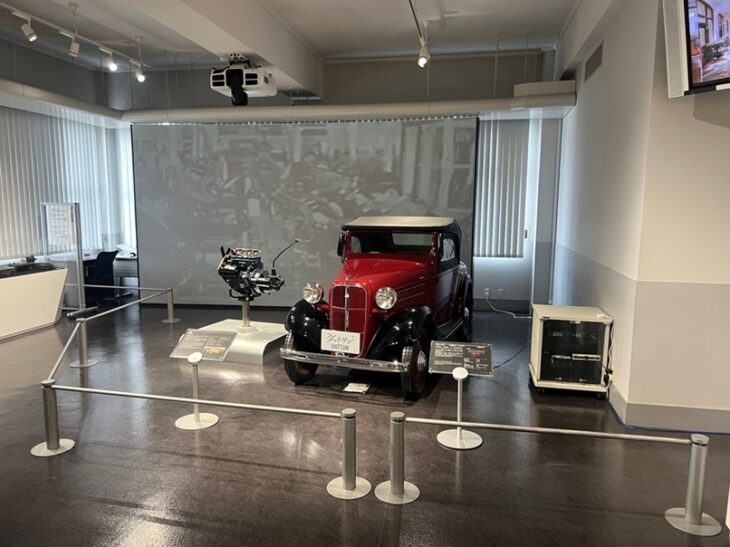
The organizers of my trip to Japan arranged a visit to the Nissan factory museum (see photo 5,6), as well as a tour of the main building of the factory.
If I tell you that everything I saw left a great impression on me, it means saying nothing. It was enough to look at the level of robotization of the plant’s workshops to understand what heights Japanese automakers have reached. I got great pleasure from everything I saw, and in addition, I saw the dynamics of the development of the factory: from the first model (see photo 5), to today’s Nissan electric cars (see, Photo 6).
By the way, many Armenians prefer Nissan cars, and my own car is also Nissan.

Meetings at the Ministry for Foreign Affairs, Defense Ministry and Japan International Cooperation Agency
Diplomatic relations between Armenia and Japan were established on September 7, 1992, and since 2010, the Armenian Embassy has been operating in Tokyo. Since January 2015, the Japanese Embassy has been operating in Yerevan.
Of course, Armenia attaches great importance to the development of friendly and mutually beneficial ties with Japan. The fact that the embassies in Yerevan and Tokyo are actively operating plays an extremely important role in deepening relations between the two countries.
Before I tell you about my meetings at the official institutions of Japanese government, I would like to quote you the congratulatory message of Armenian Prime Minister Nikol Pashinyan on the occasion of the election of Shigeru Ishiba as Prime Minister of Japan from October 1, 2024: “I sincerely congratulate you on your election as Prime Minister of Japan and wish you every success in this responsible post. Armenia attaches great importance to friendly relations with Japan based on democratic values and mutual trust. I reaffirm my readiness to expand bilateral mutually beneficial cooperation in areas of mutual interest and invite you to visit Armenia to further strengthen bilateral relations. We highly appreciate Japan’s significant support aimed at Armenia’s multifaceted development and hope to establish new cooperation programs for the benefit and well-being of our peoples in the near future. I wish you good health and success in all your endeavors, and peace and prosperity to the friendly people of Japan.” The text of the message of the Prime Minister of Armenia shows how highly the leadership of our country values Japan’s assistance in a variety of areas. In addition, Armenia is ready to expand cooperation with Japan in new areas of cooperation.
As an expert, I would suggest that the Armenian government deepen and expand cooperation with Japan in the energy sector. Diversification of Armenia’s cooperation with partners in the energy sector is of vital importance for our small country. In addition, it is very important to emphasize Nikol Pashinyan’s words that friendly relations with Japan are based on democratic values and mutual trust. Therefore, it seems to me that closer cooperation between Japan and Armenia in the international arena is necessary, including in the UN, the UN Security Council, the International Court of Justice and the International Criminal Court of the UN, as two countries with democratic systems of government. It is extremely important, both for our two countries and for the entire democratic community to have joint votes and statements that will strengthen the position of the democratic world in the international arena.
Several very interesting meetings were held at the Japanese Foreign Ministry. There were meetings with diplomats working in the sphere of the EU, the Caucasus and Central Asia, the Visegrad Group and the Western Balkans, as well as Russian policy. Of course, there were meetings in departments of the Asia-Pacific region, including Japan’s relations with China.
As you understand, in one of the most developed countries in the world, which is Japan, it is very natural to meet brilliant and highly qualified diplomats. I had the honor of talking with these professionals at the Japanese Foreign Ministry. I hope that I was also useful to them in these joint meetings and work.
I must say about very important news in Japan’s foreign policy. From now on, Japan considers security in the Asia-Pacific region inseparable from security in other regions of the world. For example, European, Middle Eastern or Caucasian security. This is a very serious and important change in Japan’s foreign policy, which will strengthen the positions of those countries in different regions of the world that are supporters of peaceful resolution of conflicts and disputes.
What else I would like to draw attention to. At the Japanese Foreign Ministry, they also told me about a number of problems that the country has with its neighbors. During these meetings, I was presented with the problem of the Northern Territories. We are talking about four northern islands occupied by the USSR in August 1945. Japan considers these islands to be indisputably Japanese and is proposing a peaceful solution to this issue.
There were other issues that Japanese diplomats told me about. It is important that there is such a practice and tradition: to present to representatives of different countries, including experts, the position of the Japanese government on a particular issue that is extremely sensitive for Japan.
I would like to draw attention to the fact that Japan attaches great importance to the dissemination of information and knowledge about the traditions and culture of the country in its diplomatic work.
The Japanese Ministry of Defense presented us with a new Strategy for National Defense and Security of the country. Of course, Japan remains committed to resolving disputes and conflicts peacefully. However, I would like to mention one innovation. Given the extremely tense situation that has developed throughout the world, and the practice of launching missile strikes on the territories of certain countries, Japan has introduced a new concept: to keep the right to retaliate against the territory of the country that decides to launch a missile strike against it.
In the modern world, we see countries and authoritarian leaders who want to revise the existing UN norms and rules. These countries, in violation of international norms, are trying to solve problems with their neighbors through military operations. For example, Russia is conducting a military operation against Ukraine (and in reality this is aggression against a sovereign country), including missile strikes across the entire territory of Ukraine. Unfortunately, in the Middle East we also see missile strikes being launched against the territories of certain countries. And, unfortunately, there is no end to this escalation.
In addition, changes have been made to the National Defense and Security Strategy of the country, according to which it is necessary to further deepen relations with the United States and other countries that share the same values, and also that Japan will allocate at least 2% of its GDP to the defense budget.
At the Japan International Cooperation Agency, I was told in detail about the tasks of this structure of the Japanese government, as well as the assistance and projects that they are implementing in Armenia. Here, too, a detailed and interesting conversation took place. I am grateful to the management of the International Cooperation Agency for the serious assistance provided to Armenia in a variety of areas.
Visit to the National Museum of Territory and Sovereignty
The National Museum of Territory and Sovereignty introduces the history and policy of Japan regarding the territory and sovereignty of Japan. The museum opened in 2018.
The museum presents exhibits on very sensitive issues for Japan – the state affiliation of a number of islands. Here is the issue of the Northern Territories (four islands occupied by the USSR in August 1945), and the issue of Takeshima Island.
The museum’s exhibit explains the grounds for the affiliation of these islands to Japan, the claims and actions of other states, as well as the reaction and position of Japan in relation to these states.
The creation of such a museum is a very interesting experience when a country informs the international community of its position on unresolved issues with neighboring countries, and also presents its position on these issues. It is also important that Japan plans to resolve these issues only through negotiations and dialogue.
I think it would be reasonable for Armenia, which has many unresolved issues with some of its neighbors, to take advantage of this experience. I think we could use this Japanese experience, and establish a similar institution of Armenian sovereignty.
Meetings with renowned Japanese scholars, experts and journalists
During my trip to Japan, I also had meetings with scholars from leading universities, renowned experts and journalists of the country. Some of them had visited many “hot spots” of the world, including Nagorno-Karabakh.
During these meetings, we discussed a wide range of issues related to the situation in the South Caucasus, the war in Ukraine, the escalation of the conflict in the Middle East, Iran’s policy, the West’s tense relations with Russia, the cooperation of the South Caucasus countries with the EU and NATO and many other issues.
I presented to my colleagues the foreign policy of Armenia and the efforts of the current Armenian government to establish peace in the region, and the situation with the negotiations with Azerbaijan on signing the Peace Treaty and continuing the process of demarcation of the Armenian-Azerbaijani border. The positions of Turkey and Russia on these issues were also presented by me to the Japanese expert elite.
I must say that in many meetings I have drawn the attention of the Japanese intellectual elite to the fact that aggressive actions against Armenia and the Armenians of Nagorno-Karabakh are also aggression of authoritarian regimes against Armenian democracy. This, in fact, is also very clearly seen in Russia’s aggression against Ukraine, which is not only a war for territories, but also a war against the young Ukrainian democracy. I must note that the role of experts and journalists from Japan and Armenia can be extremely important in revealing the enormous potential of Armenian-Japanese cooperation.
What do the Japanese and Armenians have in common or what unites us
The Japanese, like the Armenians, do everything to make Japan appealing to visitors.
The Japanese, like the Armenians, do everything to show the best sides of their people’s traditions and culture.
Both nations have an ancient history and traditions.
Both nations respect national codes of identity and symbols.
Japan has a democratic system of government, like Armenia, with the only difference being that Armenian democracy is young and not yet stable.
The Japanese and Armenians are exceptionally hardworking.
Mt. Fuji and Little Ararat also unite us!
What is useful to learn from the Japanese
There is much to learn from the Japanese, but I will draw attention to one national feature: the Japanese are extremely careful about the nature around them. Moreover, they deify many phenomena and objects around them. Therefore, it is very useful and important to get to know Japan better and cooperate with it even more actively. They are very attentive to details and very responsible during cooperation.
Conclusion
In conclusion, I would like to thank the Japanese Ministry of Foreign Affairs and the Japanese Embassy in Yerevan for the opportunity to visit and get to know this beautiful country. I must note that the program prepared for my visit was extremely interesting and multifaceted.