
Japan is one of the countries that inspires and lives in the imagination of people around the world. Who has never wanted to visit it? This desire seems to connect with Charles Baudelaire’s (1821-1867) poem “Invitation au Voyage” (p.127), in which the verse “tout n’est qu’ordre et beauté” (“everything is but order and beauty”) could very well refer to Japan. I remembered Baudelaire’s poem during and after my seven-day trip to the cities of Osaka, Hiroshima, and Tokyo in the fall of 2025. A seven-day trip in which I sought to compare the real Japan with what had existed for decades in my imagination. Here I share with you the result of some of the things I felt and experienced during those seven days. For a career diplomat holding the position of Director of the Institute for International Relations Research (IPRI) at the Alexandre ...
[Read more]

Introduction The rapidly evolving international order—characterized by the war in Ukraine, conflict in the Middle East, the intensifying Taiwan Strait crisis, and persistent North Korean threats—has highlighted the fragility of liberal democratic systems and the urgency of bolstering multilateral security cooperation. In this context, the trilateral security partnership among South Korea, the United States, and Japan has gained unprecedented strategic relevance. As Indo-Pacific geopolitics become increasingly complex, and as authoritarian powers assert their influence, a stronger and more structured trilateral alliance is imperative to maintain regional peace, deter aggression, and promote shared democratic values. I. The Strategic Foundation for Trilateral Security Cooperation The Korea-U.S.-Japan trilateral relationship rests on a shared commitment to liberal democratic values and a rules-based international order. South Korea and Japan, as advanced democracies, have each made substantial contributions to global peace and development. Historically fraught relations between Seoul and Tokyo ...
[Read more]

Japan, an island nation with the world’s sixth-largest exclusive economic zone (EEZ), relies profoundly on Maritime Domain Awareness (MDA) to protect its economic vitality, national security, and environmental integrity. MDA, the comprehensive understanding of activities within the maritime domain that could impact safety, security, economic stability, or environmental sustainability, is a strategic imperative for Japan. It involves monitoring maritime traffic, fishing, and illicit activities, while addressing multifaceted challenges such as illegal, unreported, and unregulated (IUU) fishing, piracy, maritime terrorism, marine pollution, and natural disasters like tsunamis. Japan’s holistic approach to MDA integrates strategic vision, operational efficiency, technological innovation, legal adherence, and geopolitical finesse, with international cooperation serving as a cornerstone to enhance maritime security in the Indo-Pacific. The New National Security Strategy of Japan, introduced in 2022, underscores this proactive engagement, emphasizing cooperative security to address regional challenges. The U.S.-Japan alliance, a linchpin of ...
[Read more]

In the first week of March 2025, I had the privilege of travelling to Japan for the second time, following my first visit in 2016. Returning to Japan was a great joy, as the country—renowned for its economic growth, rich culture, and long-standing ties with Cambodia—feels familiar to many Cambodians, myself included. The prospect of experiencing Japan’s vibrant cities, advanced infrastructure, and captivating tourist sites once again was truly exciting. However, a week-long visit felt far too short to fully appreciate everything Japan has to offer. This trip was exceptionally well-organised, providing me with valuable insights into various sectors, including public affairs, trade and investment, the role of ports in commerce, advancements in telecommunications technology, and the innovative use of carbon credits in agriculture. I also gained a deeper understanding of Japan’s media landscape, its strong support for demining in Cambodia through JICA, the ...
[Read more]

Sri Lanka and Japan: The Organic relationship As I embarked on the fellowship program offered by Japanese government towards achieving the objective of developing multi layered network of Japan experts among international scholars, analysts, think tankers I felt privileged and humbled at the opportunity to gain a comprehensive insight into a nation I personally admire and see many linkages with my own country. Sri Lanka and Japan may not have long historic ties may not be in the same maritime neighborhood, we are connected by destiny as two nations that felt each other’s heartbeat and connected at moments when the whole world seems thinking otherwise. The global conditions in which Sri Lanka and Japan that connected in the aftermath of the Second World War is no more, both countries have evolved and transformed, unfortunately for Sri Lanka internal conflicts, political upheavals and economic crises ...
[Read more]
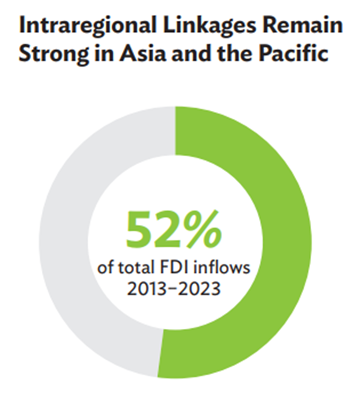
1.0 Introduction Regional integration is the process of countries cooperating across borders for economic, infrastructural, and strategic gains is gaining momentum across Asia. Institutions like BIMSTEC, BBIN, and ASEAN are facilitating greater connectivity, enhanced trade, and collective resilience. Asia’s deepening ties are evident in FDI trends, with intraregional flows averaging 52% from 2013–2023, driven largely by services, which grew from 46% to 58% of FDI share in the past decade. [1] As Asia pivots toward digitalization and green transitions, strategic partnerships are reshaping investment priorities. In this evolving landscape, Japan has emerged as a key architect, contributing 30% of regional and 10% of global FDI outflows, with a strong 11% annual growth well above the regional 5% average. Through targeted ODA, quality infrastructure investment, and engagement in platforms like the Partnership for Quality Infrastructure (PQI) and Japan–Mekong Connectivity, Japan is shaping South Asia’s regional ...
[Read more]
